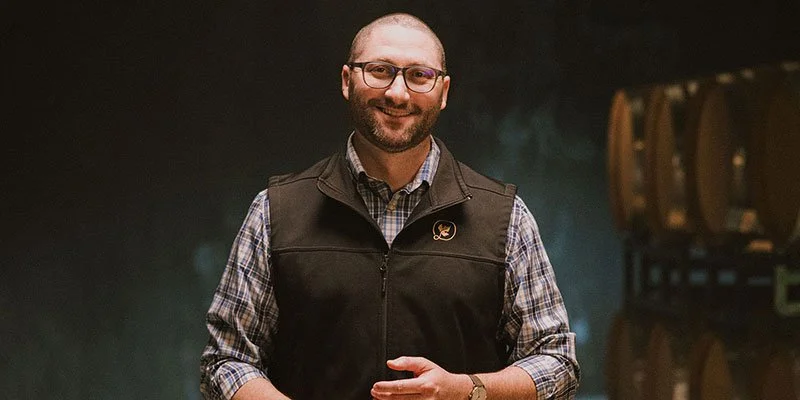
Episode 7: Kyle Altomare
The Culture of Sparkling Wine
Gloria Ferrer winemaker Kyle Altomare explains why sparkling wine is connecting with younger consumers while much of the wine industry struggles to adapt. Hospitality, authenticity, and customer experience are becoming just as important as the bottle itself.



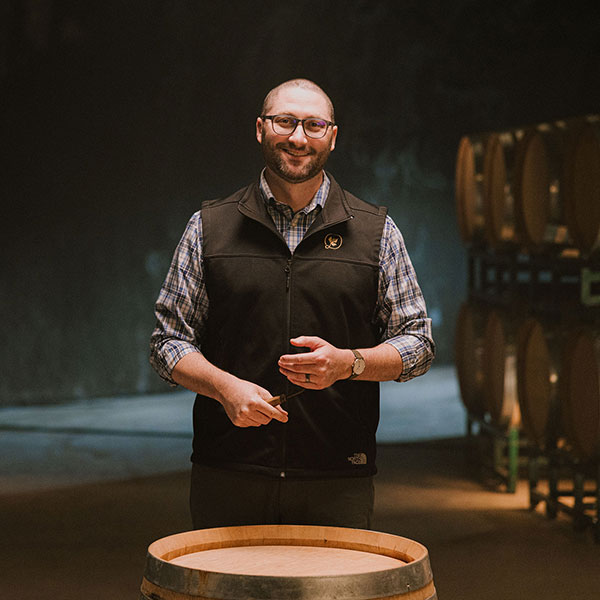
About This Episode
Sparkling wine is evolving beyond celebration culture, and Kyle Altomare believes wineries need to evolve with it. At Gloria Ferrer, that means focusing less on transactional tasting room visits and more on experiences that create long-term customer loyalty. The discussion explores authenticity in wine marketing, younger consumers, experimental sparkling wines, and why modern wine brands need stronger emotional connections with their audience.
Key Takeaways
- Younger wine consumers are looking for experience-driven brands rather than traditional wine marketing.
- Sparkling wine producers have more flexibility to experiment with hospitality and customer engagement models.
- “Forced authenticity” weakens wine brand storytelling and is increasingly easy for consumers to identify.
- Experiential wine programs can create stronger long-term customer loyalty than transactional tasting experiences.
- Modern wine brands need to think beyond tasting room traffic and build community both online and offline.
Resources & Links
Episode Chapters
Episode Transcript
Andrew Allison: Welcome to Wine Country Business, the podcast exploring the strategy and trends shaping the global world of wine, spirits, and luxury hospitality. I'm your host, Andrew Allison, a third-generation Napa Valley native and exited startup founder.
I'm bringing you inside candid conversations with the business leaders defining our industry today. This show is brought to you by Top Shelf Ventures.
Top Shelf finds, funds, and accelerates the premier opportunities in the global alcohol and vice categories, led by industry experts with a track record of major acquisitions. Their team acts as the catalyst for disruptive startups reaching for global scale. They don't just invest. They bring operational horsepower and a huge network to help entrepreneurs dominate their market.
That's TopShelfVentures.com, accelerating the world's most innovative brands. Welcome back to another episode of Wine Country Business. Who are you and what do you do?
Kyle Altomare: Thanks for having me, Andrew. My name is Kyle Altomare. I'm the winemaker at Gloria Ferrer.
Andrew Allison: How long have you been making wine?
Kyle Altomare: I've been making wine for 14 years now. If you had asked me 14 years ago if I'd be making wine, I would have said absolutely not. But I got bit by the bug.
Andrew Allison: Let's rewind the clock. How did you end up becoming the winemaker for a major winery?
Kyle Altomare: I backed my way into it. I had a plan since I was five years old. I was going to play baseball until I was 40, teach until I was 50, have a pension, and ride off into the sunset.
I stopped playing baseball at about 21 and stopped teaching at 23. I was looking around and asking myself what I wanted to do next.
I had never heard someone say, “I used to be a winemaker.” I heard people say, “I used to be a lawyer, and now I own a vineyard,” or “I used to be in tech, and now I own a winery.” So I figured I would skip the in-between and go right to where they were going.
I fell in love with it. I'm obsessed with flavor, and that's really what drew me to wine.
Andrew Allison: What were some of the first places you worked that helped shape you into the winemaker you have become?
Kyle Altomare: The first place I ever worked was Gary Farrell out in Healdsburg. I had just finished college and teaching, and I took a job doing system administration, IT, wine club, tasting room, and a little bit of everything.
Then I had a chance to help during harvest, and I was hooked. But the real formative place for me was Westwood Winery in Sonoma.
It was just me and a man named John Kelly. I found the tasting room by accident on the Sonoma Square. There was this small hallway, almost hidden, with a candle at the end. It opened into this beautiful courtyard, and John was sitting there reading a book.
I tasted his wines and thought they were some of the best wines I had ever had. I told him that if he ever needed help, I would work weekends, nights, whatever he needed. I just wanted to learn.
About a year later, he asked if I still wanted the job. He told me to meet him at a vineyard on Monday morning. We walked through the vineyard and stopped at a two-acre block of Cabernet. He told me that if I came to work for him, I would manage that block that year.
I had no idea what I was doing, but he took me under his wing. He shaped a lot of my thoughts about winemaking. It was about innovation, pushing boundaries, and making wines that had a sense of place and belonging.
He taught me how to approach wine from a human perspective rather than only a scientific one. From there, I worked my way up. I worked at Clos du Val in the cellar and on bottling lines, then went to Charles Krug and ran the lab. Later, I worked with Ana Diogo at Artesa, where I really cut my teeth in sparkling wine.
Andrew Allison: What was your first big lab mistake?
Kyle Altomare: Every year when harvest starts, I start getting harvest nightmares. Work follows you home when you're working 15 or 16 hours a day.
My first big mistake was during cold stability testing for a bottling run. I forgot to calibrate the machine. We were bottling around 150,000 or 160,000 gallons of Pinot Grigio the next week.
I turned in the numbers, and everything looked perfect. Then I woke up in the middle of the night wondering if I had calibrated the machine. Luckily, I got away with it. The wine was stable, and the calibration was not as far off as I feared.
That was the moment I realized the lab is the final safeguard. It helped shape how I think as a winemaker. You have to rely on your team. You cannot do this alone.
I started in the cellar, cleaning hoses, hauling hoses, cleaning tanks, and scrubbing inside tanks. Even if you know how to do everything in the winery, you still cannot do it by yourself. Quality wine depends on training people the right way and getting them bought in.
Andrew Allison: When did you realize the transition from still wine to sparkling wine? You make both, but you work at a major sparkling house. How was that transition, and what are the major differences?
Kyle Altomare: Sparkling wine and still wine are very different games. It's rare to find a winemaker with expertise in both because it takes so long to master each craft.
I was fortunate that at Artesa, we did so much of both. I got a trial by fire. With sparkling wine, you have to turn your brain upside down.
The things you worry about in still wine do not always apply to sparkling. The things you worry about in sparkling do not always apply to still wine. You have to think about the wines differently.
Making sparkling wine is about listening to where the wine wants to go. You need an idea of the wine you want to make because you have to start at the end and work backward.
With still wine, you start at the beginning and feel your way through it. With sparkling wine, if you do not know where you want the wine to go, it becomes very difficult because it is such a technical style of winemaking.
Andrew Allison: When were you given the keys to become the official winemaker at Gloria Ferrer?
Kyle Altomare: The transition happened in March of 2024. I was fortunate to work under Harry Hansen, who worked at Gloria Ferrer from 1986, shortly after the winery opened, until 2001. He came back in 2021.
When I started, I was the associate winemaker. I worked under Harry for a year before taking the reins. It was helpful to have someone there who understood the business and the house style.
House style is very important in sparkling wine. Our average time to release is 18 to 36 months. Some wines, like our Tête de Cuvée, sit for nine years in tirage before release. That is a very slow feedback loop.
If you make a decision today, you have to think about what consumers will want years from now. The changes you make have to be small and methodical. Slow evolution over time creates large change, but it should feel seamless.
Andrew Allison: What are you working on right now for the upcoming season?
Kyle Altomare: Innovation is very big at Gloria Ferrer. It's in our DNA. When the Ferrer family purchased the property in 1982, Carneros looked very different. People told them they should farm cattle because it was too cold and the soils were not right for grapes.
The Ferrer family owned Freixenet in Spain, and they believed they could grow grapes here. They planted vines in Carneros before Carneros was even an American Viticultural Area.
Innovation has always been part of what we do. I'm always looking for ways to push boundaries thoughtfully. We're working on a sparkling Chenin Blanc. I've made Chenin Blanc as a still wine, and I will put bubbles in anything.
I don't have a real roadmap for what California sparkling Chenin Blanc should be. You can look to places like Vouvray in the Loire, but that does not necessarily translate directly to California winemaking.
What I try to do with innovation wines is make wines people can identify with. I want someone to take a sip and have their face light up. I want the wine to make people happy.
Andrew Allison: With innovation being such a focus, how are you thinking about reaching consumers in the next year through the products you're making or thinking about making?
Kyle Altomare: You have to approach it in a social manner. Winemaking is one part of it, but it is really about the story you tell. Can you create an immersive experience with your wine?
When people come to Gloria Ferrer, they have a hospitality experience. The question is how to create wines and experiences that people can take home with them.
Opening a bottle of Gloria Ferrer at home should feel connected to sitting on our terrace, overlooking our 230-acre vineyard, feeling the cool Carneros breeze, seeing and smelling the lavender, eating great food, and drinking great wine.
That feeling is what people hold onto. It creates lifelong customers and lifelong ambassadors for the brand.
Andrew Allison: What are some of the common pitfalls brands run into when trying to tell their story?
Kyle Altomare: Forced authenticity. Everyone can say their wine is special because it comes from a special single vineyard. But if 500 other wineries are saying the same thing, it is not unique.
It's about telling stories that resonate across multiple generations, and that is difficult. Different age groups have different buying patterns and interests.
The point is not to tell a story. It is to live the story. If you live the story, it tells itself. Consumers understand when a brand is walking the walk instead of just talking the talk.
There are outside factors affecting the market, including imports and tariffs. But if you continue marching to the same ethos and backing up what you say with what you do, people respond to that.
Andrew Allison: How do you think about the industry when people talk about oversupply, doom-and-gloom scenarios, or Gen Z not falling in love with wine the way boomers did?
Kyle Altomare: Take a breath. We told the same story about millennials, and I just read that millennials are now the biggest wine-buying generation. The pitfall for the wine industry is that we fall into patterns, what feels safe, and what we already know.
What worked for one generation does not necessarily work for the next.
Andrew Allison: So the pattern is changing, but consumption is still there.
Kyle Altomare: A lot of the doom and gloom is clickbait. If it bleeds, it leads. We are trying to tell a positive story. We have been here for 40 years, and we are going to be here for another 40.
We also need to start talking about consumers differently. Historically, the point of a website was to drive tasting reservations, tasting room visits, or sales. Now we are part of an inherently online community, and wineries need to think differently.
If you think traffic only means people walking through the winery door, you are missing a large portion of consumers.
Andrew Allison: There is a community-building element. I have seen you active in online industry groups, engaging with consumers and other industry leaders. It is not just about Instagram posts. It is about showing up consistently.
How do you think about engaging with consumers on-site as a winemaker? What can a winemaker do that no other role on the property can do?
Kyle Altomare: I do not think it is totally unique, but the interaction is different. There is a different tone when a winemaker says something than when someone else on the property says it.
First and foremost, you have to come at it from an educational perspective. People love to learn, but winemakers often talk at a level that feels unattainable.
You have to break it down in a way people can understand. If you can explain something so a kindergartner could understand it, people will relate. You do not talk to them like a kindergartner, but clarity shows mastery.
Andrew Allison: From the experiences you have hosted, what are some of the highest revenue-generating opportunities a winemaker can provide besides making the best wine?
Kyle Altomare: We have a club called the Heritage Society. It is a special club where we walk guests through how to make their own sparkling wine. At the end, they go home with six bottles of their own wine.
I walk them through a blending seminar. We take them through a tirage experience, where they taste wine in tirage, which most people never get to do. They taste the base wines before blending, then they taste the wine halfway through the process, after the second fermentation in bottle. Then we do a dosage seminar.
Along the way, we teach them how to think like a winemaker. It creates a different appreciation for how much work it takes to make one bottle of wine and how many hands touch it before it reaches the consumer.
Andrew Allison: So you bring the same consumer back on-site multiple times.
Kyle Altomare: Four times.
Andrew Allison: That creates multiple revenue opportunities. They may stay for food, buy bottles, or do a tasting that day. You have multiple chances to re-engage them with the brand.
Kyle Altomare: Exactly. The big revenue opportunity comes from creating a lifelong ambassador and a lasting memory. People go home and tell their friends about it.
We have people flying in from all over the United States. We have a large local audience too, but people come from Texas, Florida, Idaho, and elsewhere. They plan vacations around this experience.
When they go home, they talk about it in a natural way because it was their real experience. That is a powerful way for them to deliver the brand message.
Andrew Allison: That creates the kind of reaction where another consumer hears about it and wants that experience too. With many self-blending experiences, the wine can be fun, but the shelf life is limited. Guests are not necessarily going to blend better than someone who does it every day.
Kyle Altomare: That is where this experience is different. We guide them through it. The class makes decisions, but I provide guardrails. We talk through whether they want more Pinot Noir, more Chardonnay, and how those choices shape the wine.
Then we take the blend back and make it into a commercially acceptable sparkling wine with a long shelf life. These are real wines made only for that customer base and that class.
We have been doing this for four years, and now we have a library of these wines. Only the class members can buy them, but we can bring the classes together to taste their blends side by side.
It is fun to see a group of strangers become a community. By the end of the first session, people are going to dinner together and planning trips. There is also a little competition, which is fun. Everyone has pride in their wine.
Andrew Allison: When you think about 2026, what are you most excited about in the industry?
Kyle Altomare: I am most excited that the next generation is looking at things differently. That applies to both consumers and winemakers. We are at a tipping point where people are not satisfied with the status quo.
When I drink wine at home, it is rare that I drink the same wine twice in a month. That is part of the journey. The next generation of consumers and winemakers is looking for different things.
That could mean alternative vessels like amphora, clay, or sandstone. It could mean a new varietal that is not traditional to an area but exists in a small block. I have been looking for varietals that can be made into sparkling wines outside the usual framework.
That is where the Chenin Blanc came from. Our general manager and I were brainstorming ideas, and she mentioned Chenin Blanc. I thought, why not put bubbles in it? Let's try it.
It is exciting because the next generation of consumers and winemakers is more willing to try different things. The risk is that you do not always know if there is a market for it.
Andrew Allison: Your wines are available at major retailers, including Whole Foods and BevMo. What is it like making wine at that scale, where a small mistake can mean a lot of capital?
Kyle Altomare: It is humbling. To be a good winemaker, you have to remove your ego. I can make wines I love all day long, but if I am the only one drinking them, they do not resonate.
You have to be humble because one mistake can come back quickly. The biggest thing is to have a sense of calm and direction.
I have always said that nervous winemakers make nervous wines. You can feel it. The wine feels disjointed or forced.
Great winemakers know how to live with controlled chaos without trying to over-control everything.
Andrew Allison: Kyle, thank you so much for joining us today. Where can people visit you and try your wines in person, or buy a bottle that you made?
Kyle Altomare: All of our wines can be found at gloriaferrer.com. You can also come taste with us in southern Sonoma, in the Carneros region, right on Arnold Drive, just north of the raceway in Sonoma, California.
Andrew Allison: I will put all the links in the show notes. Kyle, thank you so much. It is always fun to catch up with you.
Kyle Altomare: Thanks, Andrew.
Andrew Allison: Thanks for listening to Wine Country Business. For more insights and video clips, follow the show on Instagram at WineCountry. If you found value in today's conversation, please follow us on Spotify, Apple Podcasts, or wherever you get your podcasts.
A brief thank you to our publisher, Wine Country Media, and a special thanks to Napa Valley Car Club for letting us record at The Barn, their members-only club in downtown Napa. I'm Andrew Allison. Thanks for joining me, and we'll see you in the next episode.
Latest Episodes