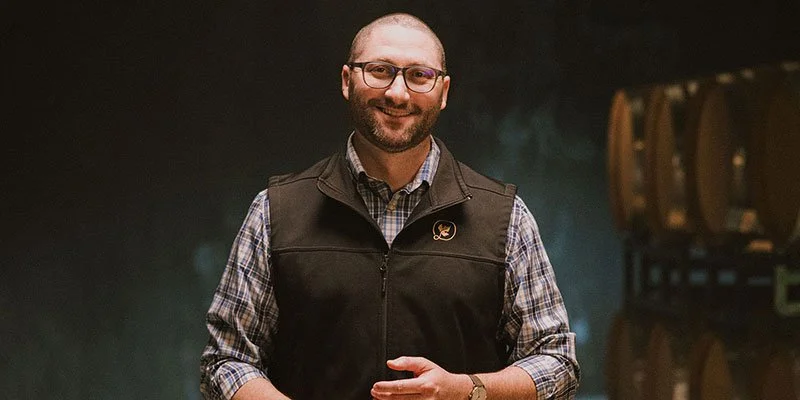
Episode 2: Michael Cann
Legacy Shift
Legacy models aren't broken - but they are outdated. This episode explores why Wine Country's real opportunity lies in courage, creativity, and rethinking how value is created.




About This Episode
Wine Country stands at an inflection point. Long-standing models still work but no longer guarantee growth. In this episode, Michael Cann explores why the next era of travel, wine and hospitality will be shaped by leaders willing to rethink products, experiences, pricing, and how real value is created for today's customer.
Key Takeaways
- Digital discovery channels can no longer be treated as stable or predictable.
- Luxury brands face real risk if affordability and access aren't addressed.
- Playing it safe often delays necessary change until it's too late.
- Consumers still want experiences—but they expect relevance and value.
- Long-term operators must prioritize adaptability over optimization.
Resources & Links
Episode Chapters
Full Transcript
Andrew Allison: Welcome to wine country business, the podcast exploring the strategy and trends shaping the global world of wine, spirits and luxury hospitality. I'm your host. Andrew Allison, a third generation Napa Valley native and exited startup founder. I'm bringing you inside candid conversations with the business leaders defining our industry today. This show is brought to you by top shelf ventures. Top shelf finds funds and accelerates the premier opportunities in the global alcohol advice categories led by industry experts with a track record of major acquisitions. Their team acts as the catalyst for disruptive startups reaching for global scale. They don't just invest they bring operational horsepower, a huge network to you, the entrepreneur, to help you dominate your market. That's top shelf ventures.com accelerating the world's most innovative brands. Let's dive in. I'm so excited to introduce today's guest. Who are you and what do you do?
Michael Cann: I'm Mike Cann and thanks for having me. It's an honor to be here today.
Andrew Allison: It has been fun to get to know you over the last few years. For those that don't know, What business do you own and operate today?
Michael Cann: I own and operate wine country media, digital media business that owns a portfolio of websites including Napa valley.com wine country.com sonoma.com covetpass.com
Andrew Allison: we will come into what that business does today. But when you think about where you started, how did you end up becoming the owner of websites like Napa valley.com
Michael Cann: the journey started the first half of the career. My career my career was in investment banking. Started at Bank of America, moved on to Roberts and Stevens, and then Montgomery securities, focusing on capital raising. And M and A was a great opportunity to look at a lot of different businesses in different sectors. Met a lot of great people, and had exposure to all kinds of transactions from both a financial and an operating perspective. And so it gave me a really interesting view on how a business is started, funded, run, operated, et cetera. And as much as I love that experience, at first, I thought it was didn't want to work for a big firm, so I went to a little firm. Then when at the little firm, I realized I just didn't want to work for someone. Wanted to work for myself. So I started my own firm. And then once I started my own firm, I realized, you know what, I just want to be a banker. I want to go build companies instead of buying and selling them. And so I started a business, really on a napkin called Tap dynamics. And we were a data solutions company for bars and restaurants that we helped them on one side, measure and manage their draft beer offering. We then packaged that information and sold it to breweries, anybody really who wanted to understand what was happening. On premise that business went till 2010 moved on from that, founded a data marketing company called sparked, built it for two years, did the best we could, failed spectacularly. The experience was great. My co founders were incredible. Lots of reasons why it didn't work, but it didn't work. So I found myself at a crossroads, where felt like starting a business from scratch seemed like an enormous challenge, and so I took a year and decided to expand my frame of reference. Started reading different things, going to different networking events, tried to expand who I met and the ideas that I was presented. And in that process, got introduced to the owners of what at the time was free run technologies, and they owned this portfolio of websites. They were at a crossroads and their ownership. And somehow we landed on a deal. And in mid 2014 I was the proud owner of a fledgling digital media startup in an industry I knew absolutely nothing about.
Andrew Allison: It's such a good story. And so you end up buying this business in 2014 and you've helmed it to today. What are some of those highs and what are some of those lows in that journey?
Michael Cann: Highs for sure, the people I've met in the business, the experiences I've had, as I tell people all the time, not selling cement, I'm out selling digital marketing products to wineries, luxury hotels, restaurants, tour operators, large brands. And so I've had incredible opportunity to see different places, experience different things, taste incredible food, drink great wine, and meet really, really smart people. So I would say for sure, the experiences that I've had have been most of the highs. I think the team that I've worked with has also been a huge high. I've had a core group that's worked with me most of the time. My partners, Kimberly and Jenny, have been indispensable partners in this business. So I would say those would be the highs. When I bought the business, the goal was to buy it and flip it in five years and start a process of buying small businesses, turning them around and moving on till 2017, for those that are from the region, know, the Tubbs fire hit that set us back in a big way. Another setback in 18, another setback in 19, covid in 20. And my five year plan turned into a 10 year plan, you know. And I would say, you throw an earthquake in there, and some other things. The only thing missing was the locus to have the full trifecta of biblical issues take place. But I think within all of those scenarios, it also offered an opportunity for me and our team to learn to operate in times of distress, which spawned creativity. It spawned new products and tons of adversity during. Covid. And so as difficult as those situations were, they were deeply meaningful in who I am as an entrepreneur today, who I am as an operator, and great appreciation for what it took to survive out of that. And I think it took a while to acknowledge that my vision of what it could be at that time was different than what it, in fact, was, and I had to let go of that and paint a new picture. And that's kind of what we're trying to do today.
Andrew Allison: If you had to think of the industry between Napa and Sonoma, oftentimes both are following similar trends at the same time. If you had to give observation between what's Napa doing that Sonoma is not, or what's Sonoma doing, that's Napa is not. Have you noticed anything on either side of the valleys?
Michael Cann: I think this is a delicate question for a variety of reasons. I think it's two very different regions. And if you're from the area, you're aware of the distinction, the soul of each part of the region, the different experiences it offers, et cetera. If you're not from the region, you think that everything is Napa and it's all Northern California. And so I think the perception as it's evolved, at least since I've been here and over the last 10 years has seen sort of unprecedented evolution. And I think what I tell people about, certainly about Napa Valley and to a lesser degree, Sonoma County, just from a numbers perspective, is it's one of the greatest stories of luxury destination development that exists today. To take a region that was relatively unknown, certainly from a tourism perspective, and then judgment of Paris puts it on the map. All of a sudden, you've got iconic visionaries like Mondavi and others come rolling through, and it takes off. And I think the momentum that was created over that period of time, and it was due to the vision of a lot of people, which I give a ton of credit to, but it also coincided with a demographic shift of what are today, boomers that were open for those types of experiences that as they moved into the 80s and 90s, had more disposable income to move towards luxury travel, and it really compounded on itself. And I think was as that took off, businesses rode that wave, which I think was a generally a good thing. I think what was lurking in the background was that the momentum was carrying a lot of these businesses forward, not necessarily really creative and innovative ways to drive their business, and that's not in any way a knock on their business, but all of a sudden, direct to consumer became something of a reality during that period of time, and it took off. And I think they rode that wave. So to bring it back to your question, What have I observed? I think my concern, I think a lot of people who are in the region are concerned about how quickly it has become somewhat to very unaffordable to a big cross section of that audience. And I think that exists on both sides of the hill, so to speak. I think that the other part, there's a lot of elements out of the control of businesses in this region, I think you've got demographic shifts. You have social preferences that are different in terms of either alcohol or other alternatives for a younger generation, you've got a lot more opportunities and options to spend money for luxury travel than you may have had 10 years ago. So a number of headwinds that I think really have slowed that and it's an open question to me as to how the region responds. I mean, I do think that there's tremendously smart, innovative people in this region that are going to have to evolve, probably quicker than they would like. And I'm not sure what that looks like, but I think it's I have optimism for the region, if the region can approach a situation with a beginner's mind completely.
Andrew Allison: What are you working on in 2026 at Wine Country media?
Michael Cann: Well, I think we've had to evolve our business as well as I just kind of referenced, we're looking at evolving our platform to add more value in the areas that our partners are asking for. So the primary value proposition we bring to either a winery, a hotel, a large global brand, is both the size and quality of the audience that comes to our websites, and most, if not all, of our traffic is organically generated, whether it's to through search, whether it's through llms, and we have historically been a lead generation source for a lot of these businesses. And as we look out over the next one year, two, year three years, we have to identify how we can tailor that to be more, even more specific, to address what I believe to be the biggest issue going forward, and that's customer acquisition. I think, you know, I can go all the way down the line on what's next on that, but I think we're developing a couple of different solutions that will allow a business to a figure out and connect with an audience that could potentially be new customers. B, help them optimize the people that come to their websites. And then C, we put together a white paper earlier this year called the winery blueprint, where we presented 18 different ideas to think completely differently about the industry. And so we'll be focusing on trying to work with our partners on implementing those.
Andrew Allison: And you had touched on it briefly there. How has AI changed the discoverability of places like Napa? And are you thinking about an LLM strategy? Yeah, I
Michael Cann: think it's had a huge impact on our organic traffic. It's down like everybody's is down. And I think llms are certainly now a source that are cannibalizing organic. Search. I think if you look at organic search in Google or any others, if you've paid attention over the last three or four or five years, what you see at the top of the page, to the bottom of the page has fundamentally changed. And so I think we've had in our strategy has always been focused on SEO, with language models like chatgpt and perplexity being key tools now that are largely no click answers, we've had to evolve. How are those platforms getting their data? How are they getting their answers? And I think one of the things we have to our advantage is we produce a lot of content that's very specialized in niche about each of these different regions. And when a lot of these models are looking to add content, they're going to authoritative sources to pull. So if someone says, plan me a three day itinerary in Napa Valley, they're going to go to they being the language models down to the source to pick out what's relevant, what's current, in a similar way that search did early on in driving that user experience. That's the first thing I think we'll see. I think how we're thinking about AI, we think about it from an internal perspective on how we can optimize, and I think everybody's thinking about it that way, but we're finding ways to automate different tasks, to think through things and accelerate and be more efficient. But really, I think, as we look out, the other thing we're trying to do is help our partners and clients figure out how they can become more relevant. I think, to me, that's the biggest risk for any of our clients today. It's hard enough to be on page one of a Google search result for primary keyword searches, best hotels in Sonoma County, best win wineries in Napa Valley, we were able to bring a lot of those partners to page one with our content. Now with language models, it's even harder for mid size to small businesses to show up in those answers. And so I think our goal is to continue to create a lot of content that provides or places a lot of those businesses in there, and better understand how llms are going to source that information and produce answers over time. So I think we're adjusting to the new reality. The AI components in language models have not reached a point where they have enough context to provide great answers yet. And I think anybody who says, plan me a two day trip to Napa Valley, where you start with breakfast downtown, lunch in Calistoga, wine tasting it downtown, and dinner back again up in Calistoga. Realizes that's not realistic. So I think there's absolutely a role for content providers like ourselves. But I also think too, with the pace of evolution of AI, it's moving so quickly now that I think it would be naive to say, Hey, this is the way it's going to be for the next six to 12 months.
Andrew Allison: Yeah, completely. I, I've always believed that travel is ripe for disruption by AI. But to what you're describing, the data, hygiene and the recommendation quality is so calibrated to the individual who's asking the question that you know, it's not one to not one size fits all. When you are thinking about, what are some industry trends that somebody should be mindful of beyond AI, what are you hearing?
Michael Cann: Let's we'll start with the wine industry first, because I think that's the one we probably talk about the most. I think the biggest thing we hear from our users and our customers is value. And when I say value, I'm not talking about free, two for one, I'm talking about feeling a customer or a person feeling like, if they spent $100 they got value back, right? If they go to a restaurant, if they go to a wine tasting, if they go to a hotel, what type of value are they getting? And I think there's absolutely a willingness to spend but I also think that, especially the younger generation that's moving up, is more focused on value and less focused on brand. And I'll date myself a bit, but my generation and above was a little bit more focused on brand. I'm willing to pay for the brand of something, and that's the cachet that I'm looking for. That's the value I have. I think this generation is looking for the value in the experience. What am I getting? What am I what can I talk about? What picture can I take? What memory can I take? I think the industry needs to adjust to that. And I think that's again that runs contrary to where the industry has been going, which is higher prices, higher prices, higher prices. Luxury, luxury, luxury. Will that matter to a different demographic. It doesn't matter as much to what I would categorize as the growth demographic. So value, and redefining what value means is, I think one of the big trends that needs to be adjusted, I think the second thing, and it plays into value, though, is recognizing what does the user really want? And I think oftentimes, and this has been true for my own experiences, a winery will put the wine front and center because that's what they've toiled for. That's what they've built. That's where the art is, right. The reality is the person's coming there for a broader experience. And so I've found, and I think our users are finding now, when wine or that product is integrated into an experience and not become the experience, you offer a better opportunity to present value and a more interesting experience.
Andrew Allison: When you put those two thoughts together, the thing that comes to mind that I think about often is the users that don't have the context don't know what to ask for, and the value exchange being, you know, take whatever number, $100 in, do you feel like you got $100 or more of value back out? And as I've spent a lot of time helping people answer the question, I'm going to Napa Valley. Where do I go? Most people would say yes to other stuff if they knew. To the options of what was out there, and they're just very myopically focused on whatever they had heard about before. And so I truly believe that what you're saying is true, and just how consumers solve that in the years ahead will be very interesting to follow.
Michael Cann: Yeah, for those who have never been here, it's an incredibly beautiful area that's diverse in geography and people and experiences. And I think that's a role we've tried to play, is to open the spectrum a bit, to show what's possible here, what's available here. And I think one of the things that's really stunting that at the moment is affordability. I don't think that's unique to this area, but I think you're getting less people willing to take that chance, to come up and have that because of the affordability issue. And I don't think there's an easy answer to that. Frankly, totally
Andrew Allison: it's very complex. But Napa in particular, but Sonoma as well, has definitely benefited from the fact that a lot of major metros are one hour away by car, so it can supplement the visitation in addition to the one the folks that fly in, how are you thinking about trends that are going to affect the greater NorCal wine industry or California's wine industry in general, that aren't necessarily wine related trends.
Michael Cann: I think affordability is a big the first one, because I think that if I look at travel as a trend, consumer spending as a trend, drinking as a trend, like each of those are individual trends you could dive into and dissect, right? But ultimately, it does come to share a wallet. And I think when it came to wine tourism, let's say in the United States, for many, many years, Napa Valley and Sonoma County were really the two primary places you went. And in the last 15 years, you've seen an expansion down to Central California, up into the Pacific Northwest. They're making great wine in a lot of different places in the country. And I think what's in think what's interesting if you look at some of these other places, take Texas, take New York, take Virginia, where they don't have a growing season that creates the level of quality that they do in Napa Valley, they've offset that with unique experiences. And you talk about it, you got to a Texas winery, you're going to sit down and have barbecue and play cornhole and drink wine, versus going up to the Pacific Northwest and doing something different. So they've really made the experience the focus and the wine the secondary piece to that. I think as it relates to this market, they have to look at they being the businesses within these regions. What do the people within the broader Bay Area want? And I think if you look at our audience, that represents about 40% of our audience, California represents about 55 to 60% of our audience. So you have a lot of people within either drive or a one hour flight. What do they want? What are they looking for? And I think we talk a lot about that's got to be, got to educate them, and we have to tell them about this and tell them about that. That's true. But I think when you strike an experience, you come up upon something that's really unique. It's amazing how that gets the word of mouth and social media, obviously, as well, proliferate that very, very quickly. So I think there has to be courage to take some risk. And I think that's another thing that I think if I were kind of providing constructive feedback, because the success was so steep for such a prolonged period of time, it created an environment to risk aversion.
Andrew Allison: When you think about the industry trends that have definitely left a finger mark on the wine industry, it's easy to point to the people that really put Napper Sonoma on the map. What are some of the things that technology wise, obviously, AI is one of them. But what are some of the other ones that you should pay attention to as a business owner?
Michael Cann: I typically answer this question by moving back out of technology for a moment and focusing on the hospitality, because I feel like so much of the conversation moves to the distribution piece of it and the underlying product itself is has got to be something that's interesting and meaningful to have the ability to distribute it broadly and successfully. And so I think I can attack that question from a How do I look at technology in terms of outbound marketing, creating connection, et cetera, and then I can look at it as, how do I create an underlying product or experience, and where do I take it? This is less technology, but I think in the last five years, you've seen a lot of businesses take the experience in these two regions into different markets, taking it into the home market of a consumer in either a large metro area or other areas, and try to recreate, if you will, the experience that they would have here in their backyard, to expand the addressable market. I think that's something that's non technology, but I think that's something that you'll continue to see people experiment in success with. I was explaining this earlier today. One of the things I learned about this industry early on, that I thought was remarkable was the difference in culture within a winery. And I know we've talked a lot about wineries, there's all kinds of different things we can talk about with hotels and transportation and activity, but within winery specifically, it seems to me, my impression has been the backside of the house is has a culture of risk taking, innovation, test and learn to the winemaking of viticulture, and then you move to the front side, and there's a focus on brand and user experience and hospitality, but there's far less aversion, there's far less willingness to take risk, to try different things because it might impact the brand. And although I understand that, in my mind, the risk of not test. And learning at this point is higher than the impact if you were to do something that failed.
Andrew Allison: 100% agree, there's so many, especially when the brand has grown to a certain size, there's so many people that are, you know, never leaving their brand playbook. It's frustrating when you're out there trying to help them grow their business.
Michael Cann: And the example that that, that I thought was most relevant was, again, dating myself, but you know, and IBM, at one point, was the global leader in mainframe computers, and at the top of the market, made the decision they were going to transform their business into software and services. And it was a make or break move, and it was, it took a tremendous amount of courage to do that, but they were able to look forward and see the mainframe is going to be a long, slow decline at some point. I don't they didn't know when, but the future was software and services, and they made that move. Now it's a stretch to compare the wine industry to the global technology industry, and I think it's easy for me to sit here and say, hey, you need to completely change your business. That's very difficult for a company that's done something the same way forever. So by no means am I saying this is easy, and this was our point in the winery blueprint. But I think paralysis by analysis is is has set in for a lot of people, because there's a general fear in taking risk. And so I think that long round the Ben answered your question, I would say moving out of a zone of comfort and be willing to have a couple of fails, be willing to lose a couple of customers, be willing to make a mistake in favor of potentially coming on to something that could, in fact, open up a new market, open up a new customer segment, et cetera. And I think again, every business will get to this point on their own. At some point, some are moving faster than others, but the pain point will get concentrated enough that I think most businesses, if they want to continue on, are going to have to make that shift.
Andrew Allison: What are some of the new features and products inside of wine country media that you're working on right now?
Michael Cann: We're in the final stages of testing a new product called reveal IQ, and this is a platform that allows a business, a winery, specifically to identify users that come to their website, be able to communicate with them proactively and then integrate all that information into their e commerce platform to create a full closed loop. So you can optimize the people that are there. You can provide custom messaging to them. You can then track attribution and see if those people actually bought so we're trying to carry our value proposition from lead generation to then helping them drive conversion, but then add a measurement component to that. We're excited about that opportunity. I think, in terms of my view on the industry, you know, this is a this is a general change in sediment. For me, I would say I'm hopeful. I would say be aggressive, to be optimistic at this point. But I'm very hopeful. And I think that there's a tremendous amount of creativity and resilience in the wine industry, the hotel industry, the drill the travel industry, Napa Valley, Sonoma County, and I'm rooting for change. Frankly, I'm rooting for people to kind of step out and say, Hey, listen, we have to evolve this now, and we want to help support that evolution any way we can Nice.
Andrew Allison: Well, Mike, if people want to get a hold of you, where can they find you online, and we could put all of your sites and Instagram handles in our show notes as well.
Michael Cann: Great. Yeah, I'm on Twitter, our websites. I'm on medium as well. Easy to find. Mike, thanks. Thanks Andrew, for having me. Appreciate it.
Andrew Allison: Cheers. Thanks for listening to wine country. Business for more insights and video clips, make sure to follow the show on Instagram at Wine Country. If you found value in today's conversation, please follow us on Spotify, Apple podcasts, or wherever you get your pods. A brief thank you to our publisher, wine country media, and a special thanks to Napa Valley Car Club for letting us record at the barn their members only club in downtown Napa. I'm Andrew Allison, thanks for joining me, and we'll see you in the next episode.
Latest Episodes