Episode 3: Paul Mabray
Building Wine Tech
Wine tech doesn't fail because of ideas—it fails because of adoption. This episode explores what it really takes to build products wineries actually use.



About This Episode
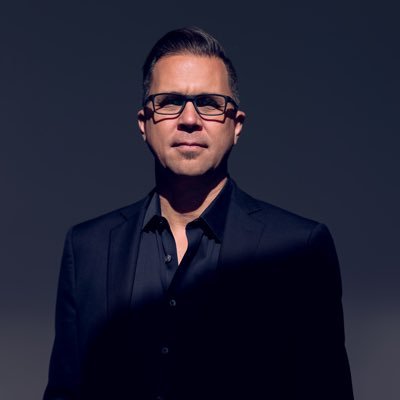
After decades building wine technology, Paul Mabray shares why most products fail not from lack of innovation, but from lack of real usage. In this episode, he unpacks what true product-market fit looks like in a fragmented, relationship-driven industry and why solving real, painful problems matters more than chasing hype or trends.
Key Takeaways
- AI is loud, but many wineries still haven't mastered basic e‑commerce or selling beyond the tasting room.
- Real product‑market fit is proven by usage, not pitch decks or buzz.
- Venture‑backed wine tech is uphill: tiny, fragmented market and reluctance to pay for tools.
- Pix's collapse shows what happens when focus blurs and fundraising drains execution.
- The future advantage is cleaner tech stacks, better data, and tighter alignment of systems, people, and processes.
Resources & Links
Episode Chapters
Full Transcript
Andrew Allison: Welcome to wine country business, the podcast exploring the strategy and trends shaping the global world of wine, spirits and luxury hospitality. I'm your host, Andrew Allison, a third generation Napa Valley native and exited startup founder. I'm bringing you inside candid conversations with the business leaders defining our industry today. This show is brought to you by top shelf ventures. Top shelf finds funds and accelerates the premier opportunities in the global alcohol advice categories led by industry experts with a track record of major acquisitions. Their team acts as the catalyst for disruptive startups reaching for global scale. They don't just invest they bring operational horsepower, a huge network to you, the entrepreneur, to help you dominate your market. That's top shelf ventures.com accelerating the world's most innovative brands. Let's dive in. Today's guest has been in the wine Tech game for a long time, but I will let him introduce himself. Who are you and what do you do?
Paul Mabray: I'm Paul Mabray, and you're right. I have been in the out Bev game since the beginning of Bev tech. You know, it's me and Gary Vaynerchuk, the old dogs and Andrew campus.
Andrew Allison: Yeah, when you think about your business journey, help folks understand what that looks like. Wine tech used to never overlap, and now it's a huge innovation space. How did you get in this space?
Paul Mabray: It started with hubris. Obviously, I'm a nerd. I'm a geek. I've seen Joy technology my whole life. My career was accelerated by technology. A lot of it came from me building tools that helped me be a better vice president of sales or run Consumer Direct. And then in the late 90s, I joined a.com company called wineshopper.com which was Kleiner Perkins and Jeff Bezos from Amazon invested in that's when I got to unleash my inner geek, and it's been there ever since. And the hubris was I wanted to be one of the change agents of wine. I wanted to be one of those people to do it now. It's transformed from hubris to I want to help my neighbors, my friends, my family, my wife's businesses succeed against digital darwinism. I want to make sure that they get the right tools and the right answers to use this digital catalyst to make better business.
Andrew Allison: I have had the good fortune of building my own wine tech business, and it is an absolute grind when your customers don't understand technology. What has it been like in your journey watching the different iterations between.com one the next big.com and then all the way up into technologies that today, there's very clear cycles. How have you experienced those cycles?
Paul Mabray: Well, I think outside of wine, those cycles have been experienced. I don't think those cycles are fully flushed through in the wine industry. I think we get shiny lure syndrome. I mean, winery is talking about AI today. Are still not doing e commerce from yesterday, so we're leapfrogging getting a good acumen and aptitude to do the job, right?
Andrew Allison: I think oftentimes, how do you think about some of the components of what is going well in the industry today? What technologies have been widely adopted and accepted?
Paul Mabray: So technology is a tough question. I think that obviously Andrew campus has done the best job driving e commerce. For those that don't know who he is, sorry, Andrew campus is the, probably one of the great digital innovators. He's done three different e commerce companies right now. He's the CEO of commerce seven. He's driven the industry. It comes from his heart. He really cares about the industry. It also comes from his head. He does a great technology solution. And so I think there's about 4000 wineries using his software at this point, that's a pretty big footprint.
Andrew Allison: What are some of the aspects of your career and from origin story up until being the CEO of your own business today? What are some of those milestones?
Paul Mabray: Yeah, I think the first ones were when I worked for John Wright from domain Chandon, or when I worked for new bomb cobalt using tools that were not there. So as an example, I wrote my own CRM program so I could pay attention to people. And that was pretty early. And then Yvonne Kobo was an interesting one. We went and our wine club grew dramatically in just six months, and they were hand entering library cards for credit card information. You know, that felt grossly inefficient, so we hired the guy that wrote SQL for Dummies to make the first ever wine club processing software that took it from four and a half five weeks to 72 hours, which you and I are probably smiling at heart. That's still long right now. It goes like that. And so those were great kind of structures. And then came along the.com era, and a lot of failures in that era, and that was kind of a big catalyst moment, a lot of a strength of Kool Aid. Thought we were gonna sell every bottle of wine online. And wine shopper is one of those great stories of failure as well as dogfood.com or Cosmo.
Andrew Allison: So today's market, as I understand it, it is something like 15% of wine is sold online, and I could be off on my numbers, but my understanding is the majority of the wine that is sold online, that is not a marketplace we're talking about, like a wineries website, is mostly people that have visited their property or are familiar with the brand, and then they are back home in their home market, and then they want to order some more, so they go to the wineries website that they remember that they had visited prior.
Paul Mabray: That's correct. Now the number one customer acquisition tool is the tasting room. I don't think that we've done a good job learning how to sell past that hospitality based customer capture. It's less than 15% from wineries, it's less than 10% I think eight, most recently, from the Silicon Valley Bank report. It veers up and down the numbers. It's greater outside of that, when you go into wine retail, into like, actual grocery and out best specialty retailers, they're doing a better job than we are at wineries, but it's a harder transaction, you know, trying to convince somebody to pay a high price that hasn't gotten on a plane to come here for a brand they don't know about that has scores the same that everyone else has. Everyone else has, that has a limited selection of product and high shipping. That's a very hard transaction, and we have to learn how to sell better to people in Boston and Austin without getting them on a plane to come here.
Andrew Allison: Wine shopper, obviously, was your big time investment in.com One, what did you do after.com.
Paul Mabray: I started a company called wine Direct, which is the one that Andrew recently was the first e commerce software solution. Brands were paying a quarter million to a million dollars to launch a website that they couldn't change the content, couldn't transact. I had no e commerce, and we built the first e commerce SaaS for the wine industry, and wine direct is in its own right, gone on to establish a very strong brand and is a big player in the space as well.
Andrew Allison: I know hundreds of wineries that are using wine direct.
Paul Mabray: Yeah, so wine direct just sold its e commerce to Andrew commerce seven wine direct, state is a fulfillment company currently that omni channel kind of from soup to nuts. Yeah. It's been a great legacy of what they've maintained going forward, and now what Andrew's carrying it forward is also great. I actually love the E commerce part, especially, how did you transition from wine direct to your next venture?
Andrew Allison: It was a challenge. I mean, honestly, I felt like I hadn't moved the football very far down the line. I mean, when I started Wine Direct, which was originally called the nursery beverage group, you know, I would go to wineries and say, Hey guys, there's this thing called the internet. We're gonna be able to sell wine. It's gonna be amazing. And they're like, oh, Paul, you're so cute when the internet fad goes away. And so it was very hard. We had to train. We actually had to do the work tell people. To help people sell because they didn't have any understanding of that.
Paul Mabray: That is the friction that I experienced in the wine industry, even most recently with the business coupe that I had built. When you have customers that are not thinking about things like user acquisition or top of the funnel or non core revenue lines, it's very hard to get customer attention. And so what were some of the learnings through that journey?
Andrew Allison: You have to match a need state that they need. You. Like too many of us, we try to force this technology solution we think is the right answer for them, and it has to be an acute pain point that they're struggling with to be able to solve a problem, right? You have to solve a real customer problem. There are lots of good customer problems. My next startup was called Vin tank, which was social. Was social media, listening, social CRM. We were listing the entire internet on Facebook, Twitter, Instagram, when anyone mentioned your wine, letting them answer from one dashboard. For me, that was amazing. I'm like, for the first time in history, the world is lighting up with customers you've never seen before in, you know, New York or in Seattle that are not getting on a plane telling they love your brand, and it's your first chance to talk to them. And I thought that was a need state, and I still think it's an easy I believe it is true, but like getting them to understand that need state was the educational process, and your customers have to believe it to need Yeah, you have to. Now they do. It's an educational process. But then now social media is transformed, pay to play 100% multi time.
Paul Mabray: Founder, same similar customer base wine brands. Alkabev, how did you go on to start your next business?
Andrew Allison: I actually wanted to get out of the wine industry. The pain was pretty brutal. I mean, the selling software to wineries was hard on me. It was emotionally hard, you know, and you're seeing your neighbor, and they're your friends and they're your customer, but like, they're at you're asking for 50 bucks a month, 100 bucks a month. They're like, well, that's a lot of money. And then you see them spend $40,000 on an event. Dollar on an event, or, like, buy some sort of ad somewhere that you know has no value, and you're just it was painful for me, and even at those low dollars. I mean, vinting was a big company. We had 4000 wineries. We were the biggest at that time. But it was just painful. So when I sold the company to big agency, I didn't want to come back. I was like, not gonna return that agency sold us a restaurant middleware. So I've actually only worked for really three companies in the last 24 now, this one, I didn't want to come back to the industry. I was really struggling. I didn't want to do another startup. And then being on the board of directors of the company, the CEO had a failure to launch. I settled into the CEO seat and tried to help that be a turnaround. There were lots of challenges. I mean, we got all the big customers, but selling software to wineries, they was called imagery, was called imagery. It was like an analytics and I definitely didn't want winery analytics on my tombstone. I was trying to get out of there as fast as possible. And during that period of time, a big company that was that, you know, wine searcher.com went up for sale, and we raised a bunch of money with a lot of friction from those guys to try to get stats and KPIs. It was like we were dealing with not enough data to go raise the money. But we still raised the money from private equity company. We had that big publisher's Clearinghouse check March of covid. We walked and we said, hey, we got the money. Let's do this. And they're like, No covid. We can't deal with it. And they walked away. So we, like everyone, huddled up, tried to figure out what we're gonna do. And I'm like, oh geez, I'm gonna have to run this analytics company for a while longer. I. And then about 90 days in, I was like, you know, there's something that's changed. The wineries for the first time need to interact with digital we're seeing it happen. Maybe this is the cresting point that allows us actually so what we wanted to launch was, if wine searcher and Vivino had a handsome, smart baby, it was going to be pix dot wine. And that's what we tried to do. It's one of the few failures I had, a very public failure. It was very emotionally draining. This was the startup that, yeah, my last start before this one, yeah. So it was a moonshot. We were gonna take over and be that world based kind of discovery platform. There's a lot of learnings I have from it. I think that's one of the biggest ones. Is venture capital money for alkbav is very hard to convince. Generally, they want you to have a very hockey stick of traffic, which, if you have that, you're killing your customer base because they're drinking too much, right? So that's never going to happen. Or they want you to take a slice of the transaction, which is just a very normal intermediation model. Structurally, that's broken as well, because you reduce the amount of participation with everybody else, everyone, right? So, and then you look at a SaaS model, it's really hard to get to SaaS model for just wineries specifically because the TAM SAM SOM is so small, so fragmented, so problematic. So that's why you see a lack of innovation around industry specific needs. And we have really cool needs. I can tell you, as an example, what Andrew's built. And going back to Andrew campus from commerce seven, the wine industry is demanding. Really interesting omni channel experience. We're asking to do subscription economy. We're asking to do hospitality. We're asking you retail, and we're asking you e commerce as a blended solution. Yeah, if you go to Nordstrom, they would want that, but they don't think that way. And they have the same thing. They have the trunk club. They have, you know, they don't know, though, if I'm a subscriber to whatever their trunk club is and I'm a high member. When I walk in, Hey, Paul, you get to only buy these jeans. You get a discount on these things. That's a really great omnichannel experience. But our market size isn't big enough to build a tool that supports a if it wasn't for Andrew campus.
Paul Mabray: When I have interacted with venture capitalists raising money for a wine tech business, the number one thing that I heard all the time was, if it's tech, it can work for multiple industries, not just wine. And if you're making something just for wine, it's going to be too narrow. How do you think about the segment and building a business today?
Andrew Allison: So I think wine probably is too narrow to be fair. So outbev, you have to expand to the entire category, and that's what we're doing, because otherwise it's the bout of budgets or the amount of companies. The curve is hard. The good news is most outbev behaves the same. I think they're wrong, though. I think that growth to you diffuse your attention, you diffuse your product solution. I think outbev has very specific needs. If you solve it for all the outbevs, you do a good job, and it's a big market, but, like, they're so focused on trying to build these different kinds of unicorns, and they love to, you know, I always say that private equity is about mashing companies together and getting value from that collision. Private equity is about cooking as much as fast as you can, like pressure cooker, and you either burn it quickly or you create a great vehicle. And so they're wanting you to do that because it helps you get large faster. I think if you have a good business model, you can do that and drive big business.
Paul Mabray: When you decided to stop working on pix, what was the things that you made the biggest mistakes on upon reflection?
Andrew Allison: Yeah, I actually done a lot of reflection on this, because it took me. I took two years off afterwards. It was so, you know, and so when pix failed, it was six days, we had a fund. We had the money raised if someone would match it. We had three people that were gonna match it, and one of them said no, and it set off a chain reaction. So six days later, we couldn't get the other two to say yes. That meant that he our lead was gonna fall out, and all of our bridge funding was now frozen, and we had to fire everyone, including myself, brutal crying in the board meeting. I haven't cried in a board meeting. Everyone was really everyone was really like, it went from hero to zero in such a short period of time. It's out in the news, it's leaked. It's like, it's tough. Then we're trying to sell a business. It's a house on fire. We can't get it. You know, there's bad you can't sell house on fire. I actually went and did my road of contrition to all the out Bev, because we, I had a lot of high profile winery and retailers and winery owners that invest in us, and I was like, I'm really sorry. They were all very kind about it, but most were like, hey, maybe you threw the baby out with the bathwater pole. Maybe you could try it again. And so I brought a small group together, and we really tried. I worked for free for a year, dealt with some bullshit lawsuits that were painful on top of it, but yeah, it was, it was hard on me, and when I finally pulled the plug. It was one board member was moving the goalposts, and two board members came to me and said, Paul, you're killing yourself. You're going to get divorced. You're hurting your health, and you're working for free, and it's not good for you in any way. You have to draw the line in the sand, or the goal post is going to keep moving. There's that person has nothing to lose, yeah. And so that's what I did. And then I just took a break. I had to, I had to breathe. You know, takes a lot out you leave it all startups. Take it all out of you.
Paul Mabray: I remember after my third startup failed, we had raised four and a half million dollars, and I told myself I was never going to do a venture backed startup again. And about four years later, I raised two and a half million dollars and did my fourth and it's, it's an itchy feet syndrome when you. You are an entrepreneur in your bones, you just can't turn that off in your brain.
Andrew Allison: Well, so I, I'm, I'm pretty niche. I mean, how many wine tech or out Bev tech CEOs are there on the planet? 10? It's very few of us, right? So the job structure to go do then, and you look at those companies, most of them are pretty broken. So, you know, I've kicked the tires with most of those guys in different ways. So the mistakes I made from pix is, you know, we were actually within from back envelope to launch as a second largest selection of y, in 14 months, we had 720k Arr, in 15 months, we had the largest selection wine with not the best UX, as there were some UX problems in 16 months, the wine industry has a problem with perfect is the animated goods. So they wanted those search engine to work like Google, and they forget how many they forget how many years it took Google and how many hundreds of millions of dollars to get to Google. So there was a brutal harangue, like it doesn't do this the way I want. Even though I would show them screens of Amazon having those same problems, it was just a weird structure. So I think the things that I did really wrong is I let the consumer side overshadow what we were doing functionally on the back end, part of that was around the editorial part of the business. We had great writers that we wrote. Some of them were fantastic. Some of the articles Ray some of the articles were absolutely inane and stupid, where we had Alice Ferring matching zodiacs with natural wine, that was just click bait, Baloney, and it didn't drive the business. And that was a disagreement in what that editorial was meant to be. It was meant to be a clean, objective way for brands to have a place to publish content, and for us, it was an MQL, a marketing qualified lead to bring the brands to us. It wasn't supposed to generate revenue. It wasn't supposed to generate these things. It was supposed to be so diffusion of focus, yeah, well, it created a diffusion of the way we were perceived, not focused. We kept it kind of isolated, but the perception level on the outside was there secondarily, because we focused so much on the search engine, that was even though we were generating great MRR in a short period of time, that was all the VCs like, how are you going to generate your your, are you going to do more ma use, where's this all coming? And they forgot the model of like, we were much more like an Open Table model. Everyone could drive the traffic to us, and we could help out with that structure on Discover. Discovery. And if you know, open table, it took them 10 years, and they didn't pay for any customer acquisition costs for 10 years, for a decade. So I kept reminding the VCs, but they were just it was so stuck in their head on that structurally. And then a couple other things that I did, you know, I split my attention between fundraising and operating, and it just drained the hell out of me. Fundraising is a full time job, a full time job. So I was never really being I'm a good operator, but the fundraising was always on this rat wheel. And so, like, I had a lot of trust falls in places that if I had been a better operator, I would have caught some of the challenges a little deeper. But you can't do both at the same time.
Paul Mabray: And I mean, I've made that mistake myself, where you're this eternal optimist and you end up running yourself ragged pursuing things that probably told you earlier on in signals that they weren't going to invest but you're like, Ah, well, maybe one more meeting with, you know, so and so is going to, you know, lead to a fundraising check. But the reality is, is I ran myself so ragged trying to fundraise that it left little of me to go around operationally for my business.
Andrew Allison: I'll tell you straight. So we had a venture capitalist. Was from their family fund. It's a famous venture capital we met with the venture capital as a back of an envelope on month 13, right when we were launching, I showed the business plan to them, and they're like, and what we've done in 13 months like, wow, Paul, you're what we hope every entrepreneur CEO would do. You didn't just meet your promises, you exceeded them. I'm like, okay, so where's our check? Is really what I'm thinking. And says. Then they said to me, Hey, Paul, we can't look at you for less than 20 to 30 million. And I couldn't rationalize a valuation. And so when I went back to the the actual Family Fund that put in money, and I was like, this is not just my fault, it's the greed of your industry. Now you're, you're you're making bigger bets, and someone who's doing a good job can't get the capital from your fund.
Paul Mabray: It's always the challenge. Let's bring it back around to what are you up to now? How are you thinking about the future? You famously have a startup in stealth at the moment, and so would love to hear how you're thinking about the greater industry.
Andrew Allison: I'm in stealth because I want to prove something to the industry, not just the industry stuff. I want to create something of value. So I'm just focused just focused on that. I'm just operating I'm doing the job. We're growing very fast. We have great customers. Over 200 brands, some of the biggest Wine Spirits companies on the planet, have already signed up for multi year contracts. I'm very fortunate that they believe in me, but also that we're rewarding them in the value of the software. And in January, we'll unveil what we built, and we'll have a lot of logos on it, and it's something that creates true value. Creates true value. I'm also pretty, I'd like to say objective in a different way about the industry. So during this two year break, a couple things happened. I just arrested. My wife was really cool. I spent some time on some boards. I started to go and visit some wineries, including my wife's and some friends, and say, Hey, let me volunteer for you on Sundays and help you with digital transformation. Let me see what you're dealing with, because I get on stage. Get on stage and I inspire you to say, yes, let's do it, and then you don't do it. So I want to find out what the friction is, what's going on there. And it's been really revealing, like we're fluffing a lot of these brands, and they can do these things, or this works automatically, or there's, you know, and not a lot of people tell an honest answer
Paul Mabray: When you think about the. A dog fooding of a product and product market fit. What are some of the things that have led to finding success?
Andrew Allison: Yeah, so usage is oxygen. That's a simple fact, right? You know, obviously, how much they're touching that software to get the value out of it. So we have a philosophy, and everywhere I've worked, usage is oxygen, if they're not using it, it's not a real thing. That's that's that's product market fit on that one. So usage is oxygen, simply that. And then if you can create value creation from as fast as possible. So seeing that in either math or response rate, that reinforces that, you know, virtuous cycle. Those things are pretty easy for me to look at for PMF.
Paul Mabray: And how do you think about the challenges that you're seeing brands have today in the market. What are some of those things that are still coming up short, you know, all these decades later?
Andrew Allison: So it's what I learned from working with these small wineries, is like the systems aren't really working that well. Some of the people aren't working that well, and the processes are so as the people, you know, systems, people and processes, you know, we're facing a tough time in the wine street, I think. But the wine Street in particular right now is having a really difficult challenge, and it's not singular. There's a lot of people that want to make it singular, and want to make a single boogeyman about what's causing our problems. I would as a vendor, and we see it through a different lens than most people, the amount of houses that are not in order and trying to scramble so I can this is actually when I see the wine Street, it's a haves and have nots. I know the businesses that are maybe are doing a little better than the market right now, but when the market comes back, they do way better because they have good systems, good people and processes. And then the people that are really struggling, it's either because they've got a Rube Goldberg machine that they're running or a Winchester Mystery House, and it's hard to operate their business, because technology is not meant to add more weight. It's meant to let you scale and talk to more customers and do more business.
Paul Mabray: Is it a data hygiene? Is it a system selection? Is it a maturity of above?
Andrew Allison: It's a system selection. But these are all just structurally like, how they treat their technology and their digital and their their business in general, like, how does it flow? Many of these technology solutions that exist in the wine industry today are because they're small and they're nice people, Mom paw solutions. They have 100 200 customers. It pays the bills. They do great job, and they build all these custom features that wineries have asked for. So now both of them are locked in together, right? There's a calcification between the system and the winery. The winery the winery is never going to leave that system to go to commerce seven or to Shopify, because those systems will never do that weird, nuanced function that they requested, and that system is now locked into that servicing that total cost of ownership of that feature forever, keep upgrading and updating it.
Paul Mabray: And so how are you thinking of, you know, not reliving the same mistakes that you've had to learn over time, like, how are you thinking about helping navigate this environment, knowing the customer as well as you do.
Andrew Allison: I'm building in partnership with the customers. This is a solution built by them. Now, it's not built by me at this point. It stopped being built by me in, you know, March and so what we're in October now. So that's a lot of time. And, you know, every day, and we have usage. I mean, we're seeing it there the you know, we reward our customers when they give us a feature set. We just had someone submit two features. We sent them a gift, you know, reinforcing that behavior. Because I want them to tell me what's right or wrong about the tool, even if it doesn't fit what I'm going to build, there's something wrong that that's not fitting their needs.
Paul Mabray: Fate, yeah, that makes a lot of sense. What would you suggest to anybody that is trying to find product market fit in the intersection of ALK, Bev and tech.
Andrew Allison: I think you need to start small. I think you should probably check to see if that's something that you think is a problem versus what is actually a problem. I think you've seen me write about it a lot about different solutions, you know that like, and I won't name it, but there's a lot of people solving problems that are not problems with the wine screen, food pairing app is not a problem. It's an it's a nice tab. It's not a need. There's no acute pain from the consumer. There's no acute pain from the brand. Building an app that does that will never scale. So that's an example, but maybe you fall in love with wine or octave and you think that needs to happen, right? That's so oftentimes you superimpose what we think the market needs versus what the market and so you need to test that. And you need someone who will Steelman that, someone who's an expert. And you call you call me, call 10, call Andrew campus, and get some real honest opinions, because everyone else will tell you Yes, and you don't want to hear yes.
Paul Mabray: And there is so many people that would show up and share effectively, like their nice to haves versus the what's actually going to change their business? And this industry is rife with people that will, yes, you to death and then take no action, if you were going to think about what are some major macro trends in 2026 that the wine industry is going to see, hear or continue to trade sideways on, what are those?
Andrew Allison: So we're going to trade sideways on AI a lot. And look, AI's for it is a good transformational technology. I think it's going to go through its own kind of Gartner Hype Cycle. I think that it's going to be imbued in everything we do. And you're already seeing that rather you go to GoDaddy, it's going to be invisible, like the internet. I think more than it's going to be the generative heart, the. Just be parts of the software that we work with. You know, we're gonna have to learn some of those skills, but it's as easy as being in Excel or Word, right? There's gonna be a lot of stuff like that. I think that what I'd like to see, and I think that we're gonna see more of it, hopefully, is reconciliation with the software they need to work with. And some of the big brands that I'm working with, you can see this kind of like rationalizing, firming down, getting rid of all this nuance and getting to the core basics that are going to drive value. And I'm speaking in so grop. At the end of the month, I'm going off to Portugal, and they asked me to talk about the future. Why? So the future? Why is going back a few years and solving what we haven't solved in the current like using E commerce better, using search better, getting product information more structured into databases that we can leverage. Those are not hard things. But if you look around at the category, how many of them do that? And such as wine, it's all octave too.
Paul Mabray: For those that want to follow your work, see what you announce in the new year. Where can they find you online? And of course, we'll link it in the show notes.
Andrew Allison: Yeah, yeah. So I'm on almost every platform, at P, maybe P, M, a, b, r, a, y, and then pour now is out there. It's our kind of it's our site. You'll see that really transform in the new year. But you know, it's holding it's a nice holding place for now.
Paul Mabray: We can't wait to watch you announce your startup in the new year. And thank you so very much for jumping on. Thanks for listening to wine country business for more insights and video clips, make sure to follow the show on Instagram at Wine Country. If you found value in today's conversation, please follow us on Spotify Apple podcast, or wherever you get your pods. A brief thank you to our publisher, wine country media, and a special thanks to Napa Valley Car Club for letting us record at the barn their members only club in downtown Napa. I'm Andrew Allison, thanks for joining me, and we'll see you in the next episode.
Latest Episodes